


Switch your auto insurance and save big with Sonnet
How to winterize an electric car
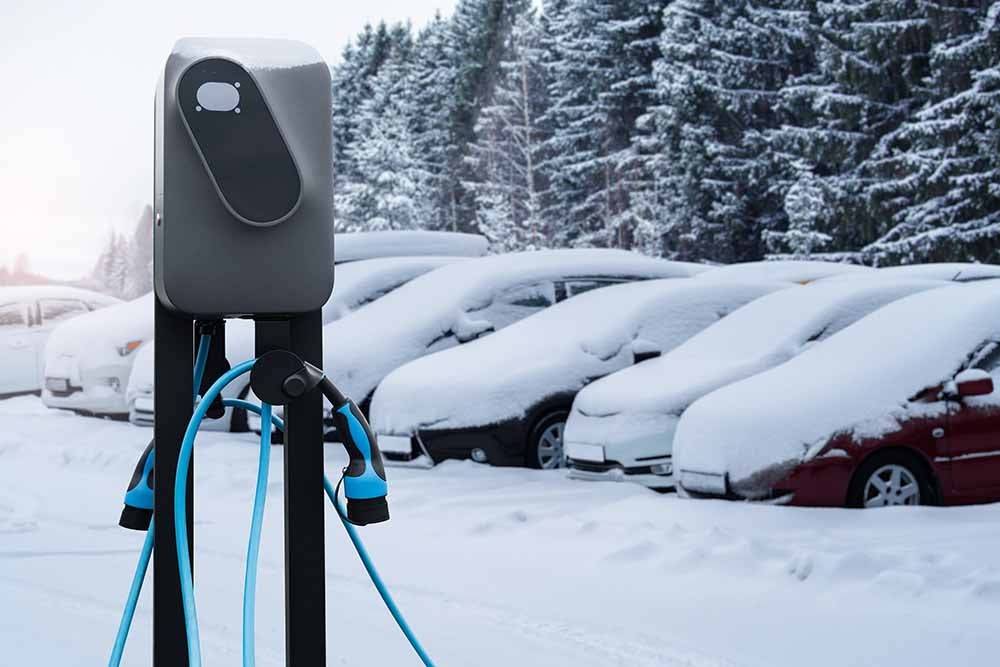
The snowy season is nearly here (and in some parts of Canada, it’s already begun), which means it’s time for everyone who drives an electric vehicle (EV) to get it ready for winter. The good news is that in many ways, electric cars are easier to winterize than their gas-burning counterparts. With no spark plugs to get fouled, no engine oil to change, no timing belts to break or traditional transmissions to maintain, EVs simply require less maintenance overall. A recent survey of hundreds of thousands of drivers by Consumer Reports found that, compared to gas cars, EVs cost roughly $6,500 less to maintain and repair over their lifespan.
But be warned, EVs have their own peculiar set of benefits and drawbacks when the temperature drops below freezing, and there are a few particular things owners or would-be owners should know about maintaining an EV in winter.
What's on this page?
Choosing the right winter tires for an EV
Apologies if you’ve heard this before, but it bears repeating: Tires are one of the most important parts of any vehicle, electric or not. Here in Canada it’s absolutely critical to have the right tires for the right season. When the temperature drops below 7-degrees Celsius it’s time to put on winter tires. (If you’re wondering whether you need all-season or winter tires, we’ve got all the answers.)
As the tire experts at Michelin point out, EVs can be harder on tires than their gas-powered cousins. Not only are EVs typically heavier because their batteries weigh so much, but their electric motors can deliver full power from the instant you touch the accelerator. “This means the weight transfers are sharper, a lot more intense than with an internal combustion engine vehicle, which impacts the wear and tear of the tires,” according to Michelin.
So, fitting winter-appropriate tires to your EV when the temperature drops is crucial for staying safe on the road. (It can also help you save money on car insurance; Sonnet offers a winter tire discount in Ontario!) In addition to having the right tires, be sure to check tire pressures regularly in winter, because cold air causes pressures to drop, which decreases your EV’s driving range and increases tire wear.
Plan for less driving range
The one big downside of EVs in winter is that, yes, they lose driving range in cold weather. A full charge of the battery simply doesn’t take you as far as it did in summer. But the situation isn’t as scary as you might imagine. According to battery analysis firm Recurrent, which analyzed real-world data from over 18,000 vehicles, many popular EVs retain 80 per cent of their full driving range when the temperature drops to 0-degrees Celsius. (Range loss varies by make and model.)
Also, be aware that public fast chargers aren’t quite as fast in winter. EVs often limit the maximum charging speed to protect the battery when it’s cold. Some EVs mitigate that issue by warming the battery when navigating to a fast-charging station, but it’s something to keep in mind.
The solution? Simple: In winter, EV owners should be aware of the range loss and plan trips accordingly. Most drivers rarely use their EVs full range, but if you do, make time for an extra charging stop and don’t be surprised if that stop takes longer than usual.
Pro tip: If you’re really running out of juice in winter and the dreaded “range anxiety” is starting to set in, you can gain additional driving range by turning off the cabin heater and relying on the heated seats instead.

Precondition the cabin
To get your EV ready to drive in winter, preconditioning the cabin makes all the difference. It’s like an EV superpower, but some drivers might not even know about this ability. Put simply, preconditioning warms up the cabin (and sometimes also the car’s battery) while it’s plugged into a charger. This does two things: It makes the cabin nice and toasty when you get in, and it reduces range loss in winter.
You can usually program the car’s preconditioning system to work its magic on a set schedule through the car’s built-in screen, or a connected app. Set it and forget it!
Recurrent recommends keeping your car plugged in overnight if possible, and setting the maximum battery charge to 70 or 80 per cent if you’ll be preconditioning the cabin. “That way, the car can pull energy from the wall to keep warm, rather than using the battery. Otherwise, you may return to a lower battery capacity than expected,” according to Recurrent’s research.
Park smart
Remember how we mentioned EVs can lose driving range in winter? Keep that in mind if you’ll be parking your EV unplugged in sub-zero temperatures for extended periods. In that scenario, as CBC reports, you’ll want to make sure the battery has more than a 20 per cent charge before parking it, so the vehicle still has a decent amount of juice left when you come back to it.
Again, don’t let this scare you. Range lost while unplugged in winter can vary depending on the car and temperature; in one real-world test an EV lost just 2 per cent of its battery charge over 28 days unplugged. If you’re unsure what do to, check your vehicle’s owner’s manual to see if it offers any guidance, or ask the dealership.

Wipers, washer fluid and a safety kit
As with any gas-powered car, EV drivers should keep up with some basic winter maintenance for their vehicles. That means replacing worn-out windshield wipers and topping up your washer fluid before the snow hits, so you can keep your windshield clear and grime free. Check the washer fluid periodically, and keep it topped up throughout the slushy season so you’re not stuck on the highway with a windshield you can barely see through. Speaking of clear windshield, keeping a good ice scraper and snow brush in your car is a must for Canadian winters.
It's also a good idea to keep some basic winter safety kit in the trunk or glovebox. Include a small shovel, a portable tire inflator, gloves, a blanket to keep warm, flashlight with extra batteries, phone charger, road flares and a basic first-aid kit.
Remember that winter affects all vehicles, not just EVs. With a few simple steps like preconditioning, having the right tires and safety gear and being smart about charging and parking, you’ll be driving your EV through the harshest Canadian winter like a pro.

Are you a Sonnet customer?
Log in to chat so we can talk specifics.